We know what we are talking about
Housing developments and complexes usually have irrigation, drainage, pumping, electrical and control installations, seeded areas, tree planting, lakes, paths and multi-sport courts. We master all of these, because we have worked with them for years.
A single point of responsibility
You deal with one person responsible for the works, get a better price by contracting the whole package and have professionals in every trade.
What we do
- Assessment of what can be reused
- Restoring irrigation, drainage and pumping
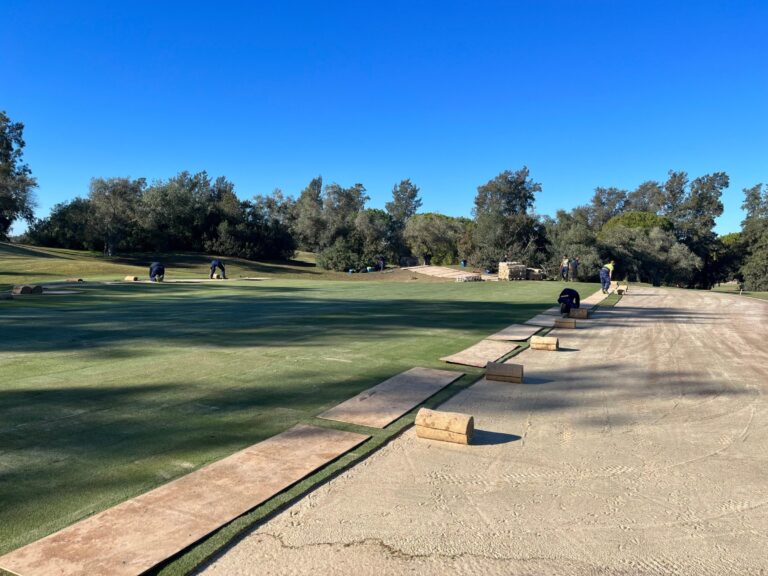
- Reseeding and grass recovery
- Gardens and communal areas of housing developments
- Sports grounds and courts
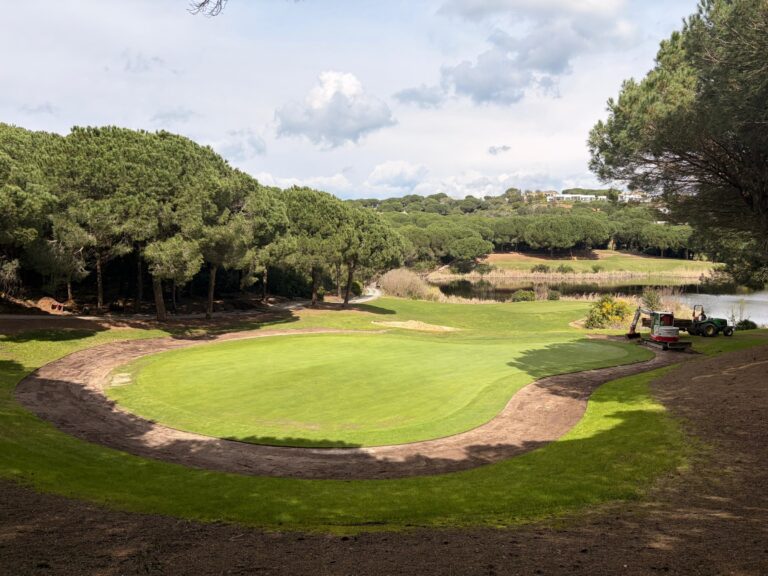
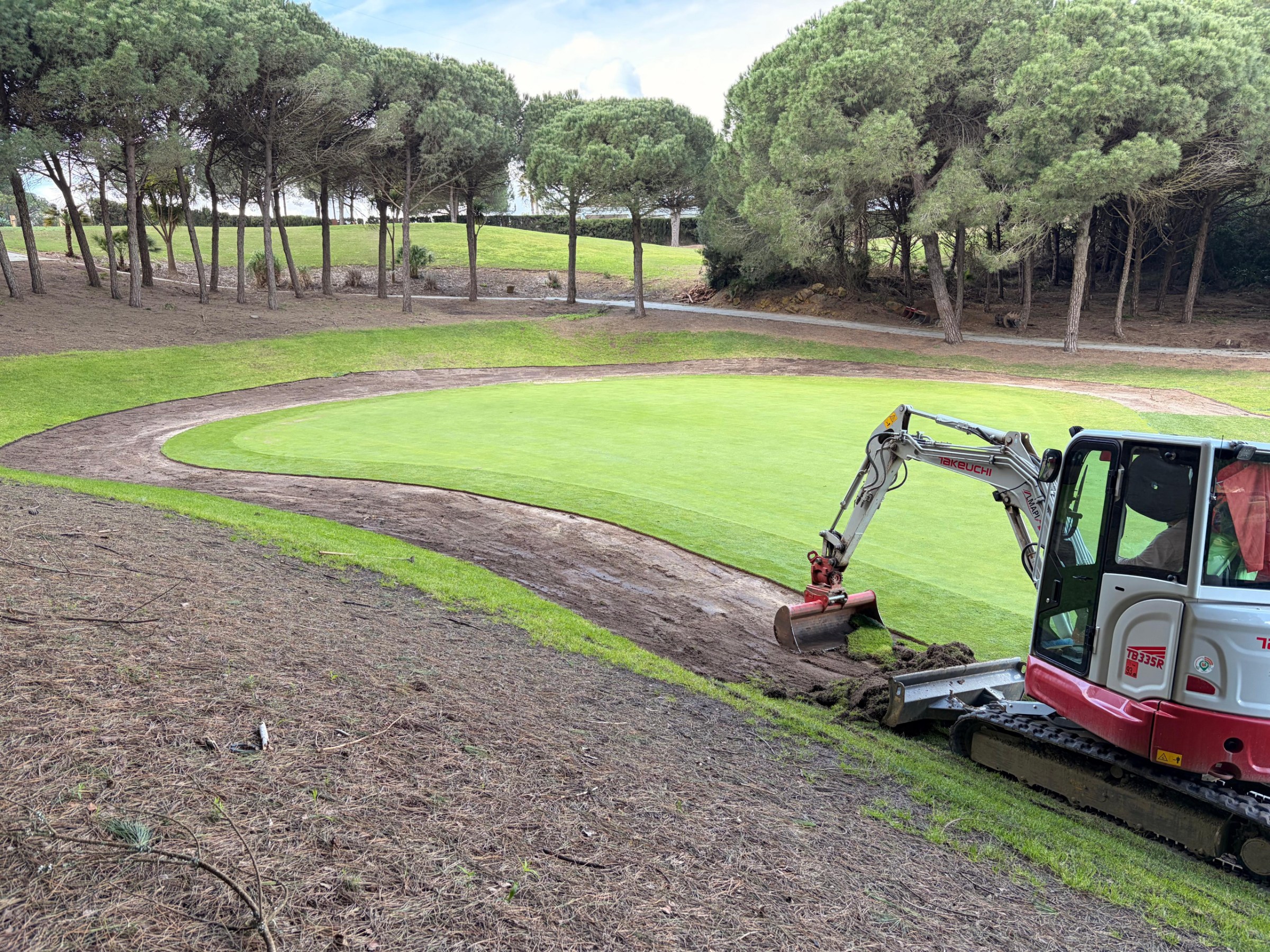
- Earthworks and slope stabilisation
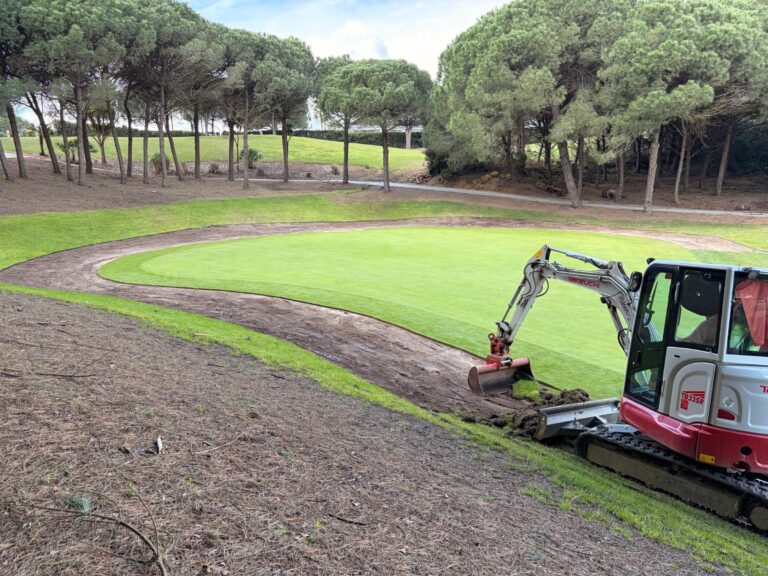
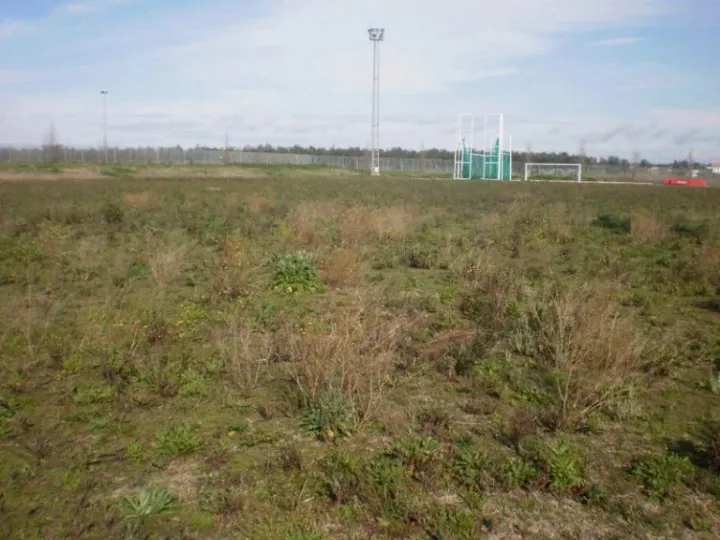
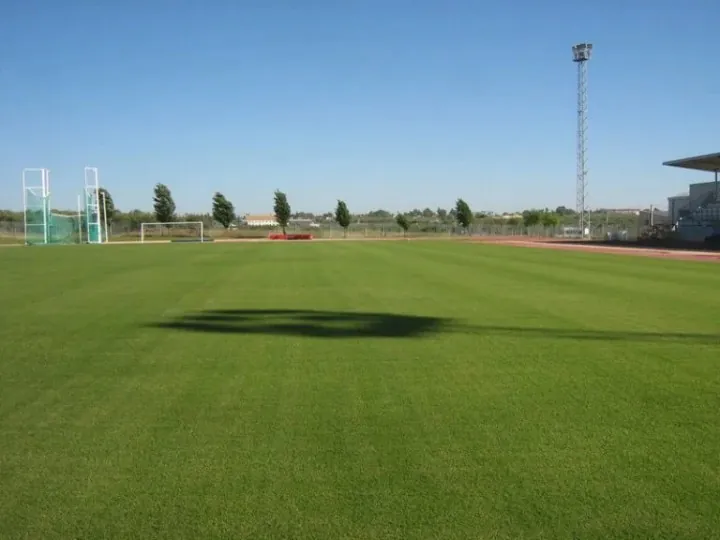
Before and after
Restore instead of starting from scratch
How we build it
We audit first, then decide what to rebuild
A stalled facility does not always need tearing out. We check what works, what is missing and what comes first, so the repair costs only what is essential.
Initial audit
We inspect the facility item by item to find out what works, what is missing and what is at risk. Without that diagnosis, any quote is guesswork.
Soil and vegetation
We study the soil and existing vegetation to decide what can be recovered and what must be replaced, rather than ripping everything out by default.
Phased plan
We order the work by condition and urgency, so each phase has a clear cost and timescale and the investment pays off from the start.
Working handover
A single contractor, with its own team and partners, carries out every trade and hands the facility over working: a stalled investment regains its value.
Frequently asked questions
Rehabilitation with judgement
Why rehabilitate rather than rebuild everything?
Rebuilding is usually the easiest option for the contractor, but not always the cheapest for the developer. Sometimes it is, and then we say so. The answer depends on the real condition of each element, and we give it once we have audited the facility.
What can be reused from a facility that looks worn out?
More than it seems, though not always what it seems. Some elements survive years of standstill and others fail as soon as they are restarted; mistaking one for the other is costly. You need to know what to look at and where, which is what we do on the site visit.
Why a single contractor rather than several?
Because there is one party responsible for the whole job, better pricing through volume and nobody passing the blame between trades. With our own team and partners we cover what a rehabilitation needs; the exact scope is set by the audit.
Why work in phases?
Because not everything is equally run down or equally urgent. The wrong order means undoing work that has already been paid for. How many phases, and in what order, depends on each facility and the developer’s budget; we set it out after the survey.
Does it make sense to revive a development stalled for years?
Often it does: networks, lakes, gardens and paths may be partly recoverable. It depends on how long it has been stalled, how it was built and what it has been through. If the audit confirms it, reviving it gives value back to a stalled investment.
And an abandoned golf course?
Neglect leaves its mark on the turf, the soil and the irrigation, and not always where you can see it. What can be saved and what should be rebuilt varies greatly from one course to another. We walk the course with you and tell you where to start.