Full construction or just the right works
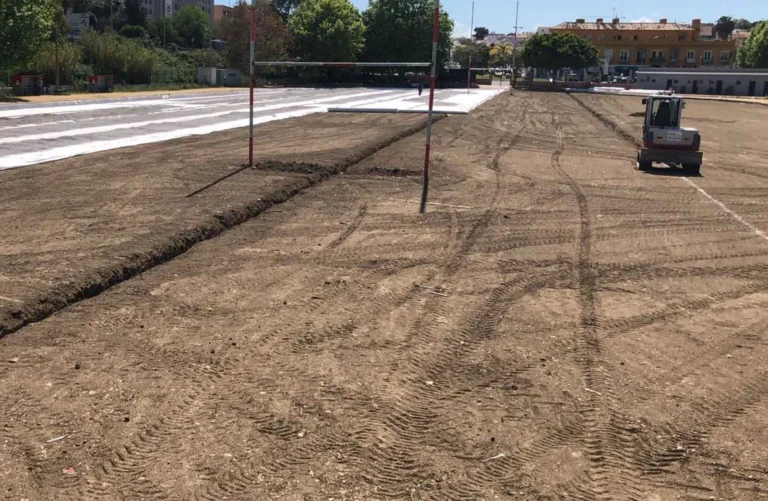
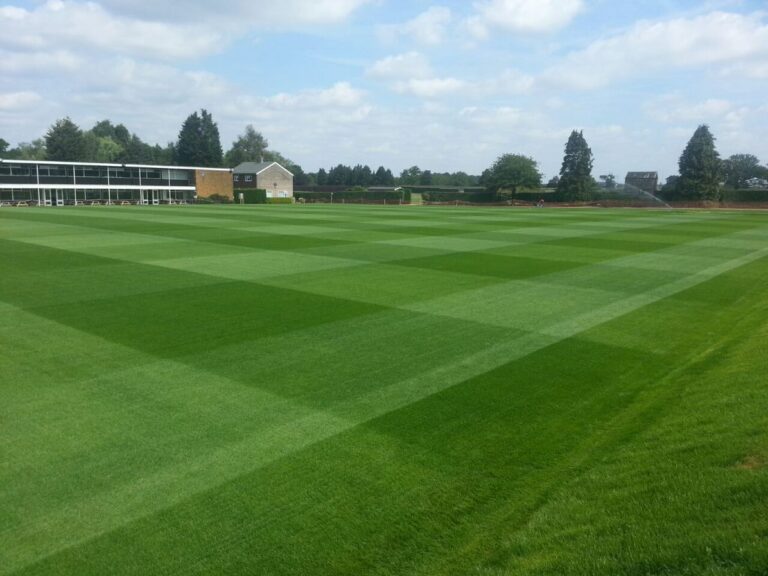
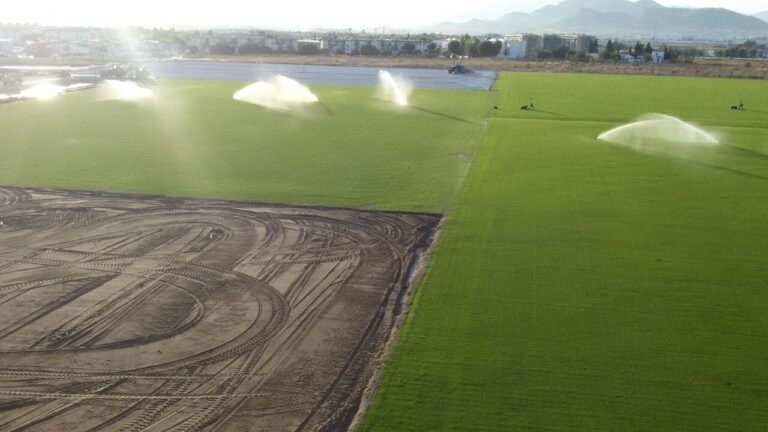
We build playing surfaces from scratch or carry out the works needed to bring them into use: replacing the grass cover, remodelling irrigation and pumping systems, repairing drainage and whatever else the pitch needs.
Works between seasons
We replace the grass cover, irrigation or drainage in the time the fixture list allows, so the pitch starts the season renewed.
What we do
- Complete natural-grass playing surfaces
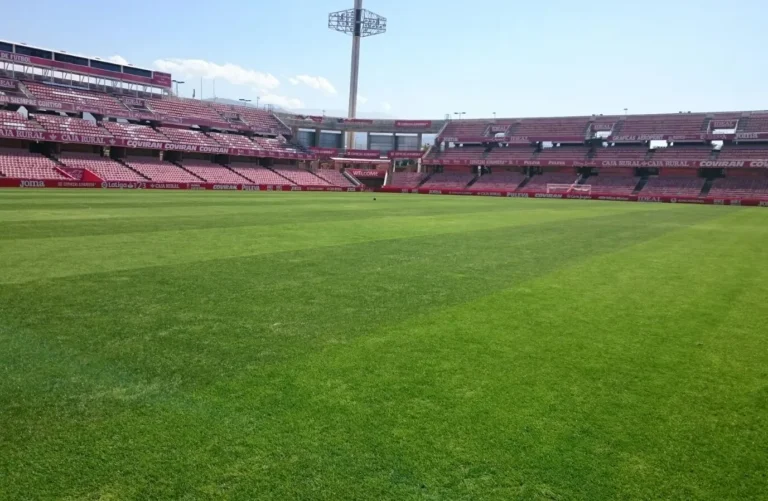
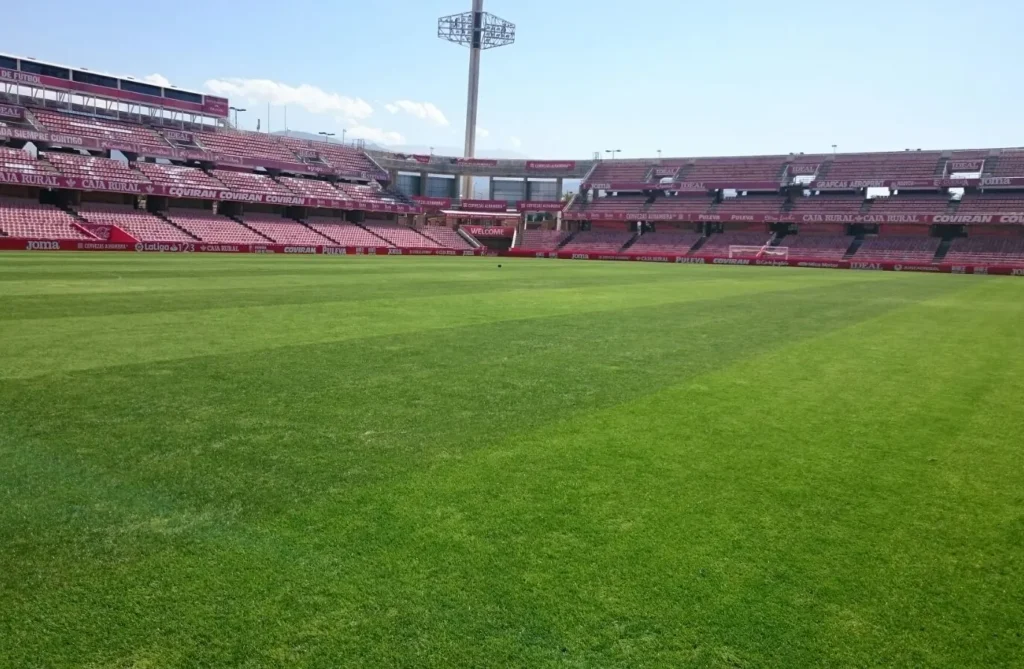
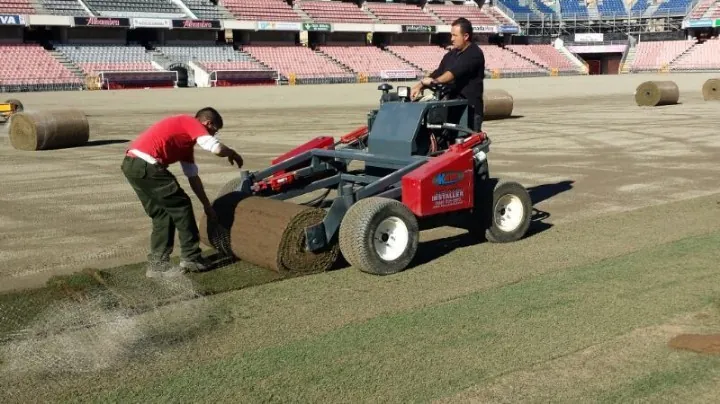
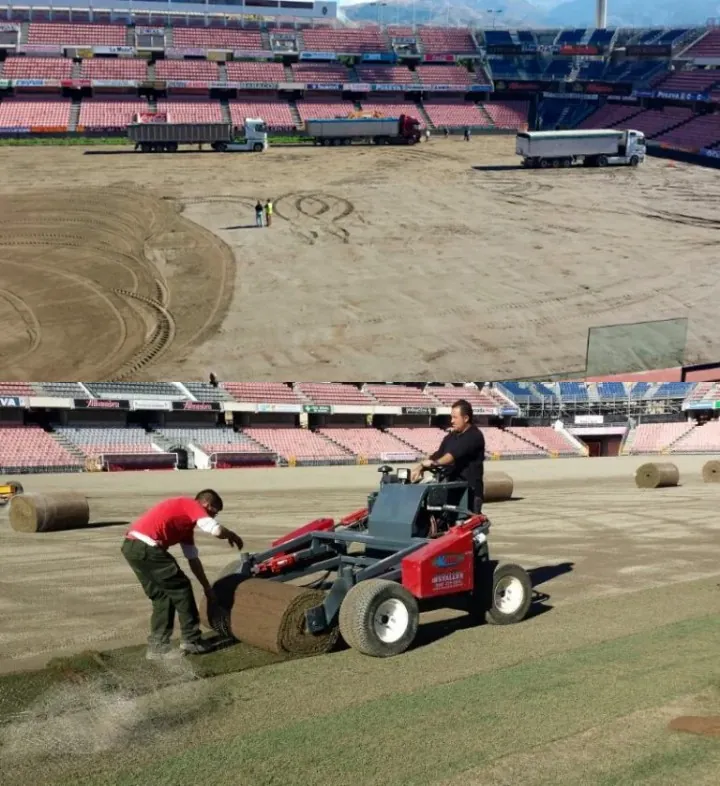
- Turf replacement with rolled turf, including at top-flight stadiums
- Artificial grass and replacement of irrigation guns
- Sprinkler irrigation, pumping and control systems
- Pitch drainage
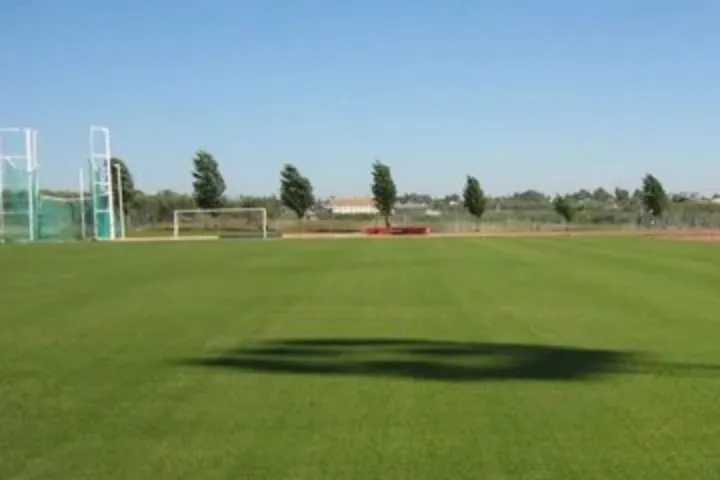
- Rugby pitches and 7-a-side football pitches
The keys to our success
- Choosing the right model
- An investment in proportion to the need
- Quality of execution and finish
- Economic and environmental sustainability
On video
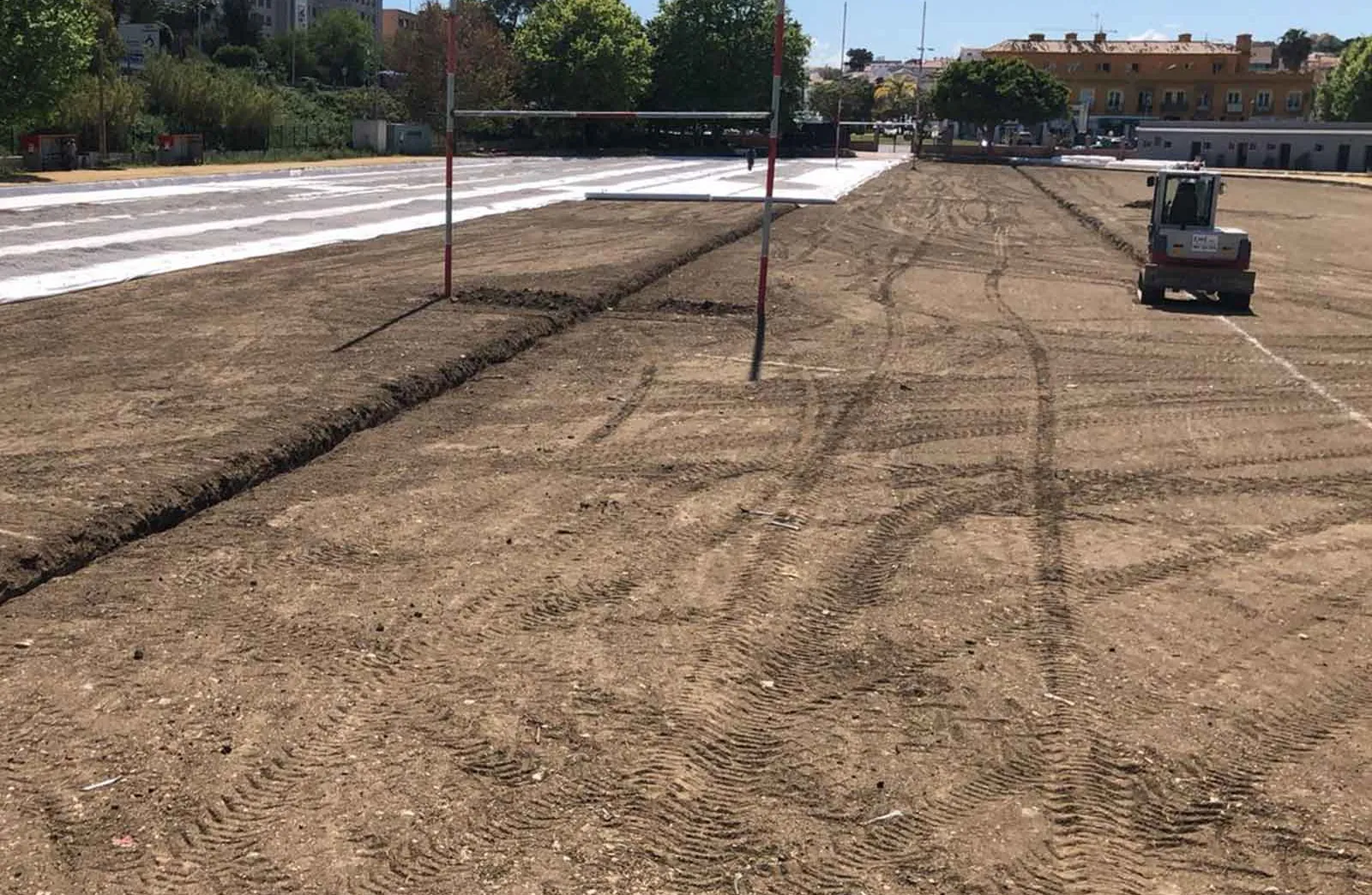
A brand-new pitch in 7.5 days
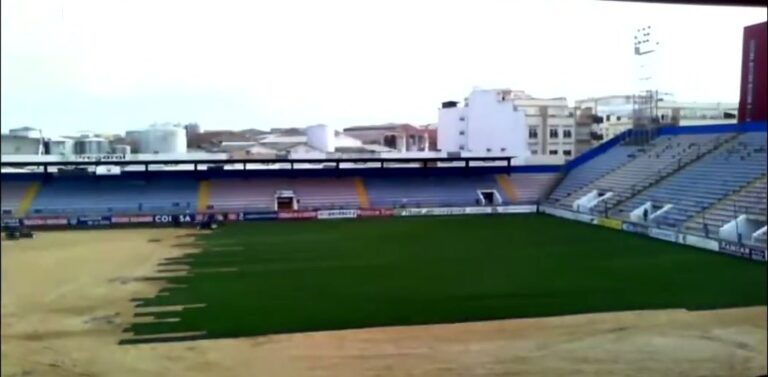
We stripped the old topsoil, installed drainage where there was none, new irrigation and pumping, a new root zone and turf across the whole pitch at the Francisco de la Hera stadium (Almendralejo).
Time-lapse by Javier Jiménez García, shared with his permission.
How we build it
From subgrade to playing surface
A natural grass pitch is built in layers, all working together to let water out and roots in. Every pitch needs its own.
Site investigation
Before design we study the soil, the climate and the intended use. Everything else depends on that diagnosis: a mistake here is paid for on the pitch for years.
Base and drainage
We leave a level base and a drainage network designed for that ground. It is what decides whether the pitch is playable the day after a storm.
Irrigation and rootzone
We secure the water supply and prepare, with tested materials, the layer the grass will live in. Ball roll, traction and wear resistance all depend on it.
Grass and handover
We establish the species or turf that the climate and use call for, and follow rooting closely. We hand the pitch over when it is ready for play, not before.
Frequently asked questions
Natural, artificial or hybrid: how we decide
Why natural grass rather than artificial?
It depends on hours of use, climate, available water and whether the pitch is hired out. Choosing wrongly is expensive: overused natural grass deteriorates, and unnecessary artificial turf inflates the budget. We decide with you once we have seen how the pitch will be used.
When is hybrid grass worth it?
When the pitch has to perform beyond what natural grass can give: a busy fixture list, back-to-back matches and little time to recover. Installation is costly, so it only makes sense if the use justifies it. On our site visit we assess whether your case is one of them.
Why a sand base rather than the existing soil?
It depends on how your existing soil drains and compacts, and on what will be asked of the pitch. Unsuitable ground turns muddy and compacts; doing more than needed adds cost for nothing. There are intermediate solutions, and which one suits you we work out after analysing your ground.
Does every pitch need drainage?
Not always. Groundwater, subsoil permeability and the shape of the site all play a part. Too little leaves the pitch unusable after every shower; too much is money buried in the ground. We determine it with our own tests on each project.
What is different between a rugby pitch and a football pitch?
Each sport punishes the grass in its own way: traction, impacts, ball speed. A pitch designed for one may fall short or feel wrong for the other. We tailor the construction to the sport, the level of play and the fixture list of each facility.
Can second-hand artificial turf be used?
It looks like a saving, but it usually arrives with a deformed base, worn fibres and no guarantee, which means risk to players and replacing it sooner than planned. Before you decide, we show you what a new solution matched to your budget would give you.